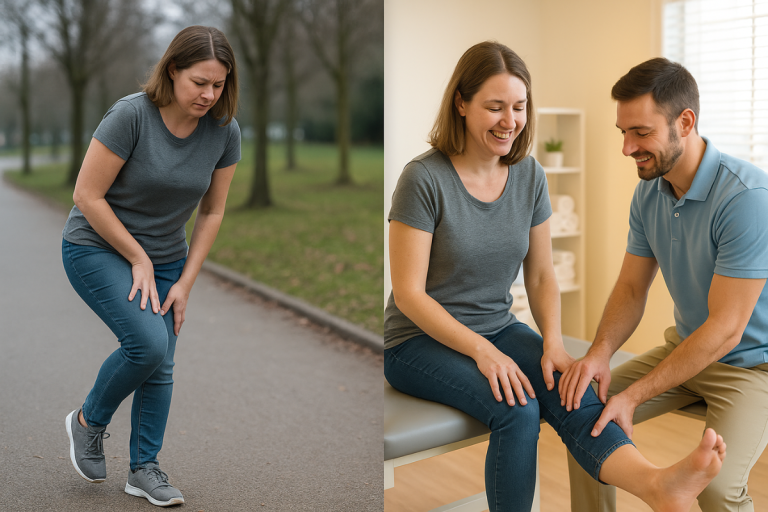
You know the feeling: a stubborn, deep knot in your shoulder or back pain that just won’t go away, no matter how much you stretch or massage it. This persistent muscle pain and tightness can limit your movement and affect your daily life. For these frustratingly deep “knots,” a highly effective and targeted treatment is gaining recognition: Dry Needling.
What is Dry Needling and How Can It Help My Muscle Knots? (A Dundalk Clinic Explains)
If you’ve heard of dry needling, you might be wondering what it is, how it works, and if it’s right for you. As a common treatment used by trained physiotherapists, it’s a powerful tool for a specific problem. Simply put, dry needling is an invasive procedure where a very thin filament needle is inserted into the skin and muscle directly at a myofascial trigger point. A myofascial trigger point is essentially the technical term for that hyper-irritable spot in a taut band of muscle that we call a knot.
What is a Trigger Point and Why Does it Cause Pain?
A trigger point is more than just a tight muscle. It’s a small area of muscle tissue that has gone into a protective spasm and can’t relax. This knot can cause pain directly at the site and is also notorious for causing referred pain—pain felt in another part of the body. For example, a trigger point in your shoulder muscle could be the real source of your recurring neck pain or tension headaches. These points are a key factor in the maintenance of the pain cycle.
The Science of the Needle: How Deep Dry Needling Works
When the needle is inserted into the trigger point, it elicits a local twitch response. This is a tiny, involuntary muscle contraction, which feels like a quick cramp or flutter. This twitch is the crucial therapeutic mechanism. It causes the muscle fibres to release, reduces the compression on nerves and blood vessels, and helps to increase blood flow to the area. This process helps to:
- Deactivate the trigger point.
- Relieve pain and improve your range of motion.
- Interrupt the pain signals being sent to the brain.
Patients often report immediate relief in both pain and stiffness following a session.
The Key Difference: Dry Needling and Acupuncture
This is the most common question we get. While both dry needling and acupuncture use thin needles, their philosophies and applications are completely different.
- Acupuncture: Is a practice of Traditional Chinese Medicine. Acupuncture treats conditions by inserting needles into specific points along meridian lines to balance energy flow (Qi) in the body. It is performed by licensed acupuncturists.
- Dry Needling: Is a modern treatment based on Western medicine principles of treating myofascial pain. Dry needling is strictly based on anatomy and musculoskeletal science. The physiotherapist feels for the trigger point and treats the muscle directly to relieve pain.
Essentially, the only similarity is the tool used. The thinking, purpose, and application are worlds apart.
What Conditions Can Dry Needling Treat?
As a treatment focused on releasing muscle tension and pain, dry needling can be used to treat a wide range of musculoskeletal issues. At our sports injury clinic in Dundalk, we use dry needling as part of a wider treatment plan for:
- Low Back Pain and Sciatica
- Neck Pain and Tension Headaches
- Shoulder Pain (e.g., rotator cuff issues)
- Tennis Elbow and Golfer’s Elbow
- Muscle strains and tightness in athletes
Is Dry Needling Safe? What to Expect
Yes, when dry needling is performed by a qualified and trained physiotherapist, dry needling is a safe and effective treatment. It is well within the scope of practice for physios who have undergone specialised post-graduate training.
During a session, your physio will identify the trigger points and explain the process. You may feel a slight prick as the needle is inserted, followed by the unique sensation of the twitch response. After the treatment, you might feel a bit of muscle soreness, similar to after a deep massage, which usually subsides within 24-48 hours.
If you’re struggling with persistent muscle knots and looking for a targeted, effective solution, it’s worth a conversation to determine if dry needling is right for you.
Ready to find out more and experience lasting relief? Contact Felix Jose Chartered Physiotherapy to see if expert dry needling in Dundalk can help you.