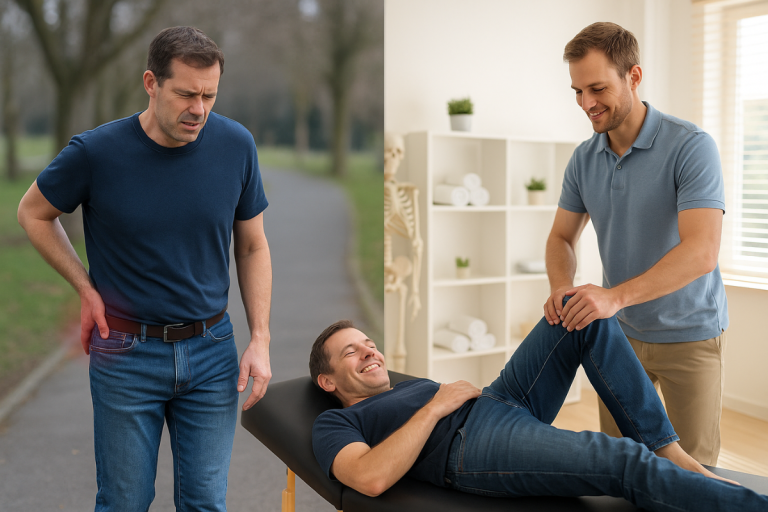
The term “slipped disc” is enough to send a shiver down anyone’s spine. It sounds dramatic, permanent, and painful. If you’ve been told you have one, or you suspect that a deep, nagging lower back pain might be a herniated disk, it’s easy to jump to the worst conclusions. But what if we told you that much of what people believe about this condition is based on myth, not fact?
Myth vs. Fact: What Our Dundalk Physio Wants You to Know About Slipped Discs
First, let’s clear up the name. Discs don’t actually “slip” out of place. Your spine is made up of a series of bones (vertebra) cushioned by intervertebral discs. These discs act like shock absorbers and have a tough outer layer with a soft, gel-like centre. A herniated disc (also called a bulging disc, prolapsed disc, or ruptured or bulging disc) occurs when the soft centre pushes out through a tear in the outer layer. This bulging part of the disc can then press on the spinal cord and nerves, causing painful symptoms.
Myth vs. Fact: Herniated Disc, Slipped Disc, or Bulging Disc?
While the terms are often used interchangeably, there are subtle differences. A bulging disc is when the disc sags and bulges outwards fairly evenly. A herniated disc is more specific, where a distinct crack in the outer layer allows the inner material to leak out. Both can cause problems, but the important thing to know is that they are all variations of the same issue: a disc herniation.
Common Symptoms of a Slipped Disc
The symptoms of a slipped disc depend heavily on the location of the herniated disk and whether it’s pressing on a nerve. A herniated disk in the lower back (the most common location) can cause:
- Dull or sharp lower back pain that can worsen with certain movements, like bending or sitting for long periods.
- Sciatica: Sharp, shooting pain down your leg, sometimes into the buttock or calf. This happens when the disc presses on the sciatic nerve.
- Numbness or Tingling: A “pins and needles” sensation in the leg or foot.
- Muscle Weakness: Difficulty lifting your foot or leg.
It’s important to note that if you experience severe weakness or loss of bladder or bowel control, you should seek immediate medical attention, as this can be a sign of a serious condition.
Myth: A Slipped Disc Means a Lifetime of Pain
Fact: This is perhaps the biggest myth. The vast majority of people with herniated disks get better with conservative treatment. The pain from a slipped disc is often most intense in the first six weeks. Over time, the body can reabsorb the herniated part of the disk, and with the right management, the painful symptoms can resolve completely. The goal of treatment is to manage the pain and leg pain caused by the herniation while the body heals.
Myth: I Will Definitely Need Surgery
Fact: This is highly unlikely. Surgery may be an option only when symptoms persist after an extended period of nonsurgical treatment or if there is progressive neurological loss. Most herniated discs do not require surgical treatment. Physiotherapy for bulging disc issues is a highly effective first-line approach.
Effective Treatment Options for a Slipped Disc in Dundalk
So, if surgery isn’t the answer, what is? The goal of slipped disc treatment in Dundalk is to relieve pain and inflammation, take pressure off the nerve, and improve your strength and function. This is where a herniated disc physio in Dundalk becomes your most valuable asset.
Our approach includes:
- Pain and Inflammation Management: We will assess your pain and guide you on strategies to manage it. This might include advice on positioning (e.g., how to lie on your back comfortably), activity modification, and when over-the-counter medications like naproxen can help relieve pain.
- Manual Therapy: Gentle, hands-on techniques can be used to relieve pain by reducing pressure on your spine and tight surrounding muscles.
- Specific Exercise Prescription: This is the cornerstone of recovery. We will provide targeted exercises to help retrain your movement patterns, strengthen your back and core muscles to better support your spine, and improve flexibility. Regular exercise is proven to be one of the most effective ways to manage a herniated disk.
- Education: We empower you with knowledge. You will learn how to move, lift, and sit with a back straight posture to avoid aggravating the disc and prevent future issues.
The answer to “is physio good for a slipped disc?” is a resounding yes. It is the most effective non-surgical disc treatment for the vast majority of cases.
Your Path to Recovery
A herniated disc can be a frightening diagnosis, but it is not a life sentence of pain. With an accurate diagnosis and a personalised, active treatment plan, you can effectively relieve your symptoms and get back to the life you want to live.
If you suspect you may have a herniated disk or are looking for effective slipped disc treatment in Dundalk, contact Felix Jose Chartered Physiotherapy for a comprehensive assessment.